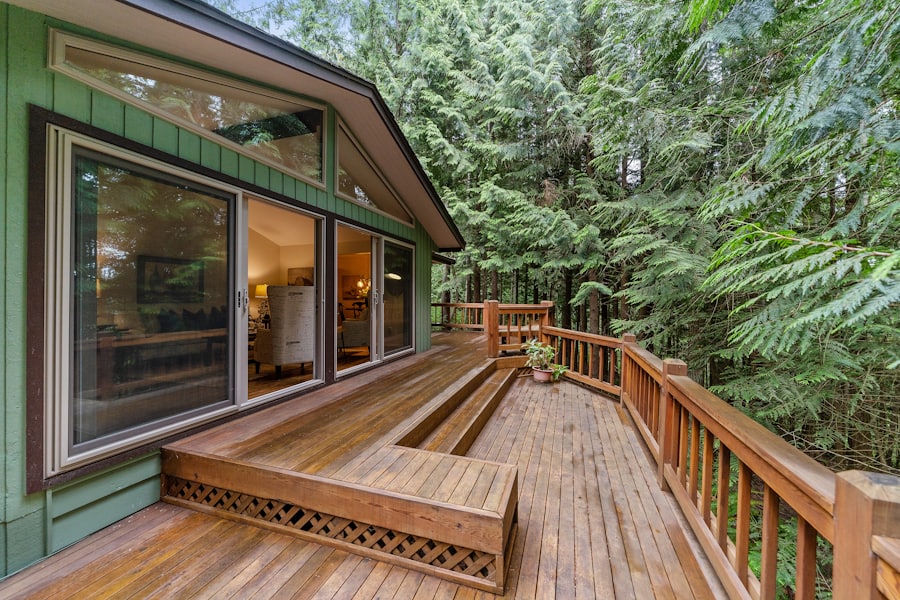
Both make a good deck here if the build under them is right. The choice really comes down to how much upkeep you want to sign up for and how you want it to look. Here is the honest rundown.
Cedar: lower cost, more upkeep
Cedar looks warm the day it goes down and costs less to build. The trade is maintenance. In our climate it wants a clean and a coat of stain every couple of years, or it grays out and can check. Skip that and it ages fast.
Composite: higher up front, easy after
Composite boards like Trex and TimberTech cost more to install and then ask for little beyond a wash. No stain, no sanding, and they shrug off the constant damp better than wood. Over ten years the upkeep you skip often makes up the gap.
How the wet climate tips it
From October into spring it rains here more days than not, and wood left outside takes the worst of it. That is why so many decks we build around Everett and Mill Creek go composite now. If you love the look of real cedar and do not mind the yearly care, it still holds up when it is built and sealed right.
What matters more than the board
Either material fails on a bad frame. Hidden fasteners so there are no screw heads to catch a sock, proper joist spacing, and footings the inspector signs off on are what make a deck last. Pick the board you like, then make sure the build under it is done right.
Common questions
Give us the footprint and we'll put cedar and composite on the same written quote, same frame and footings under each, so the decision comes down to the look you want and the upkeep you're honestly going to do.