How Fast Does Mold Grow After Water Damage? (The 48-Hour Window Explained)
Published by Larchmont Builds | Seattle, WA | Water Damage & Mold Remediation Specialists
You notice standing water in your basement. Or a pipe bursts while you’re at work. Or a slow roof leak soaks through your ceiling over weeks. In every one of these scenarios, most Seattle homeowners focus on the water itself — cleaning it up, finding the source, calling a plumber.
What they often don’t consider is what happens next.
Mold doesn’t wait. And it doesn’t announce itself. By the time you see it — black spots on drywall, a dark stain spreading across framing — it’s already been growing for days or weeks. The mold clock starts ticking the moment moisture enters your home, and understanding that timeline is the single most important thing a Seattle homeowner can know when dealing with water damage.
Here’s everything you need to know about how fast mold grows after water damage, what the 48-hour window actually means, and what you can do to stop it.
The 48-Hour Mold Growth Window: What the Science Says
Under the right conditions, mold spores can begin to colonize a surface within 24 to 48 hours of water exposure. That’s not a scare tactic — that’s the established scientific baseline backed by the EPA and the IICRC (Institute of Inspection Cleaning and Restoration Certification), the industry’s leading certification body.
What “colonization begins” means in practical terms: mold spores — which are always present in the air of every home — settle onto wet organic material and begin the germination process. They don’t need a lot. They need three things:
Moisture (a water-damaged surface provides this)
Organic material to feed on (drywall paper, wood framing, insulation, carpet backing)
A mild temperature range (roughly 40–90°F — which describes most of Seattle year-round)
Your home supplies all three the moment water gets in. The 48-hour window isn’t when mold becomes visible — it’s when the growth process begins at the microscopic level.
Why You Can’t See It Yet — But It’s Already Growing
Visible mold typically appears 1 to 3 weeks after water damage, depending on the moisture level, material, and temperature. But the biological process has been underway long before you see anything. By the time a dark stain appears on your drywall, you’re not looking at new mold growth — you’re looking at a colony that has been expanding for a week or more.
This is why professional moisture verification — not just visual inspection — is essential after any water intrusion event.
The Mold Growth Timeline: Hour by Hour After Water Damage
Understanding the progression helps homeowners make better decisions about urgency. Here’s how the timeline typically unfolds:
0–1 Hours: Water Migrates
Water doesn’t stay where it lands. Within minutes of a pipe burst, flood, or roof leak, water is wicking into adjacent materials — migrating through subfloor, being absorbed by drywall, soaking into wall cavities behind the surface you can see. The affected area is almost always larger than it appears.
1–24 Hours: Pre-Germination Conditions Set
Wet organic materials begin providing the nutrient base mold spores need. In this window, professional water extraction and drying can interrupt the process before germination begins. This is the most effective intervention window.
24–48 Hours: Germination Begins
Mold spores that have settled on wet materials begin to germinate. This is the point the IICRC references as the critical threshold. Standing water that hasn’t been professionally extracted, and wet materials that haven’t been dried to proper moisture content levels, have now crossed into active mold-risk territory.
48 Hours–1 Week: Active Colonization
Once germination has started, mold grows rapidly in the right conditions. Colonies expand, spore counts in the air increase, and the material being colonized begins to break down. Drywall paper, wood framing, and insulation become increasingly compromised.
1–3 Weeks: Visible Mold Appears
By the time you see mold, you’re dealing with an established colony. Surface cleaning at this stage does not constitute remediation — it addresses symptoms, not the problem. Certified remediation is now required.
Why Seattle Homes Are Especially Vulnerable to Post-Damage Mold
The Pacific Northwest climate accelerates the mold risk timeline in ways that homeowners in drier climates don’t face. Seattle averages over 38 inches of rain per year, and the combination of persistent ambient moisture, mild year-round temperatures, and limited drying days creates conditions where mold establishes faster and spreads more aggressively than the national average.
There are also structural factors specific to the Greater Puget Sound housing stock that compound the risk:
Crawl spaces: A significant portion of Seattle-area homes — particularly pre-2000 construction in neighborhoods like Ballard, Capitol Hill, and across the Eastside — have crawl spaces that are prone to ground moisture intrusion and limited airflow. These spaces are ideal mold environments and are often the last place homeowners look.
Older insulation systems: Many older Seattle homes use batt insulation in wall cavities that absorbs and retains moisture for extended periods, giving mold an extended feeding window even after surface drying.
Roof and drainage vulnerabilities: Seattle’s extended rain seasons create sustained exposure to roof leaks, clogged gutters, and grading-related drainage issues — often creating slow, chronic water intrusion that goes undetected for weeks.
Our team has performed water damage restoration and mold remediation across the Greater Puget Sound for over five years. The pattern we see most often: a homeowner notices an issue, does some surface drying, and assumes the problem is resolved. By the time they call us, the mold has been active for weeks in materials they couldn’t see.
What Proper Water Damage Response Actually Looks Like
The most important thing to understand about stopping mold after water damage is that drying the surface is not the same as drying the structure. Fans and towels dry what’s visible. Professional structural drying addresses what’s hidden — and hidden moisture is where mold grows.
Effective water damage response that prevents mold includes:
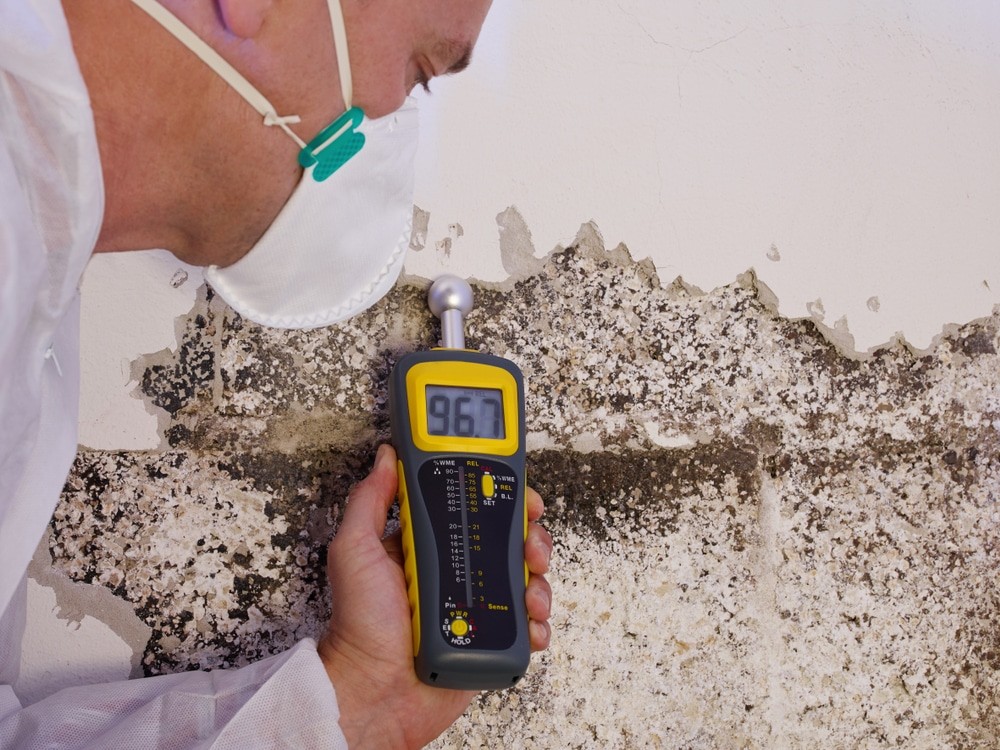
Moisture mapping: Professional moisture meters and thermal imaging locate all water-affected areas, including hidden moisture behind walls, under flooring, and within wall cavities. This is the baseline for everything that follows.
Emergency water extraction: Truck-mounted and portable extraction equipment removes standing water from all affected areas, including water that has migrated under flooring and into subfloor assemblies.
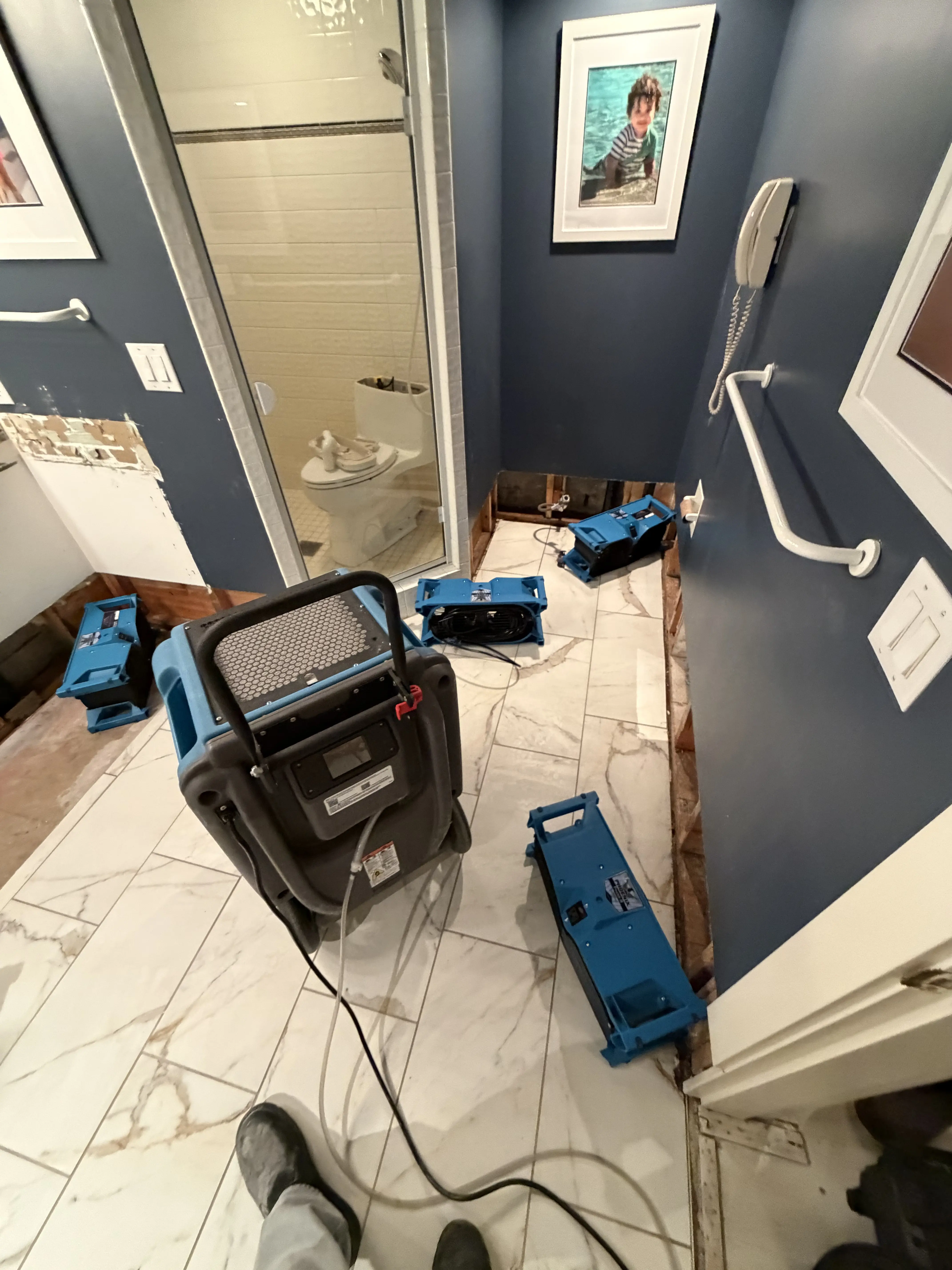
Structural drying: Industrial dehumidifiers and air movers bring framing, subfloor, drywall, and insulation to the moisture content levels specified by Washington state drying standards — not just surface-dry, but structurally dry.
EPA-registered antimicrobial treatment: Applied to all moisture-affected areas to address spore activity and interrupt the germination process.
Verification before equipment removal: Moisture readings must confirm target levels have been reached before drying equipment comes out. Removing equipment early is one of the most common causes of mold problems that resurface weeks later.
Full documentation: Every moisture reading, thermal image, and drying log should be documented. This documentation is required for insurance purposes and provides verification that the job was done correctly.
If mold remediation is needed following the water damage event, that is a separate certified process involving containment, physical removal of contaminated materials, antimicrobial treatment, and post-remediation clearance testing.
Frequently Asked Questions
Can I use fans and a dehumidifier from the hardware store to prevent mold after water damage?
Consumer-grade fans and dehumidifiers are not sufficient for structural drying after significant water intrusion. They move air and remove ambient humidity, but they don’t have the capacity to pull moisture from within wall assemblies, subfloor, or framing at the rate required to stay within the 48-hour mold prevention window. In Seattle’s ambient humidity, they’re particularly ineffective at hitting target drying standards. Industrial equipment and professional moisture monitoring are required for effective post-damage drying.
How do I know if mold has already started growing after my water damage event?
You likely won’t know by visual inspection alone, especially in the first week. The most reliable indicators early on are moisture readings in affected materials — if moisture content in wood framing is above 16% or drywall remains saturated beyond 48 hours, mold conditions are active. A musty odor is often the first detectable sign of mold activity and should be taken seriously even before any visible growth appears. Professional inspection with thermal imaging and moisture meters can identify conditions before visible mold is present.
Does homeowners insurance cover mold resulting from water damage in Seattle?
It depends on the cause. Mold that results directly from a sudden, covered water damage event — a burst pipe, appliance failure, or roof leak from a storm — is typically covered under standard homeowners policies, provided the water damage itself was covered. Mold resulting from long-term moisture issues, deferred maintenance, or slow leaks that went unreported is generally excluded. Proper documentation of the water damage event and its relationship to the mold growth is critical to a successful claim. Our team provides adjuster-ready documentation on every job.
How fast does black mold specifically grow after water damage?
Stachybotrys chartarum — commonly called black mold — requires sustained moisture over a longer period than some other mold species. It typically requires materials to remain wet for at least 7–12 days before it becomes established, and is commonly found in cases of chronic water intrusion rather than single acute events. However, other mold species that are common in Seattle homes — Cladosporium, Penicillium, and Aspergillus — can colonize within the standard 24–48 hour window. Any visible mold should be assessed and remediated by a certified professional regardless of species.
The Bottom Line for Seattle Homeowners
Mold growth after water damage is not a slow, patient threat. Under the conditions that exist in most Seattle homes — ambient moisture, mild temperatures, organic building materials — the 48-hour window is real and should be treated with urgency.
The best outcomes we see are from homeowners who call us before they can see any mold. At that stage, proper structural drying can prevent remediation entirely. The most difficult and expensive situations are from homeowners who assumed they had more time, or assumed the visible surface was the full extent of the damage.
If you’ve had any water intrusion event in the last 72 hours — or if you’ve noticed a musty odor, discoloration, or moisture indicators in your Seattle-area home — don’t wait.
Water damage emergency in Seattle or the Greater Puget Sound? Call Larchmont Builds 24/7: (206) 735-1286 | larchmontbuilds.com |